- 14 June 2026
- updated 6 July 2026
- in WordPress Plugins
- 3244
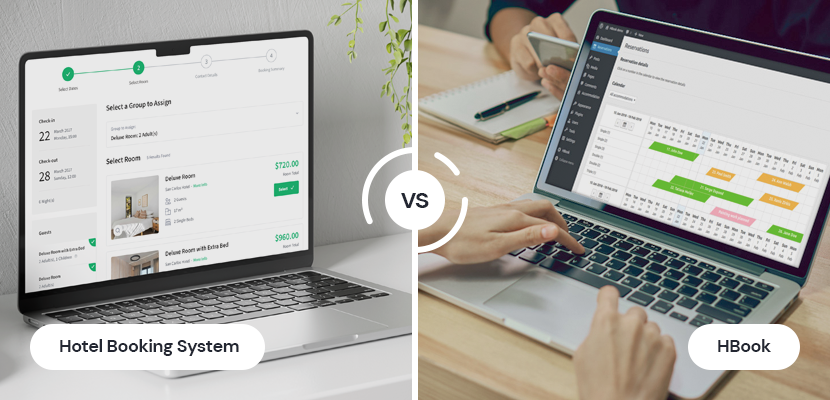
If you’re looking for a hotel booking plugin for WordPress, chances are you’ve come across HBook. It’s one of the most established solutions in this category and has been available for many years.
As the developers of Hotel Booking System for WordPress, we were curious to see how the two plugins compare today. Rather than relying solely on feature lists, we took a closer look at both the booking experience and the administration tools available to hotel owners.
In this article, we’ll compare HBook and Hotel Booking System (QuanticaLabs) side by side, examining booking workflows, property management, pricing flexibility, payments, integrations, and overall ease of use.
HBook is a mature WordPress hotel booking plugin designed for accommodation businesses such as hotels, B&Bs, villas, apartments, cottages, and vacation rentals. It includes reservation management, seasonal pricing, booking rules, extra services, fees, coupons, Stripe and PayPal payments, security bond support, and iCal synchronization.
Its structure is mainly accommodation-focused, with booking forms, accommodation types, rates, seasons, and reservation management handled inside the WordPress admin area.
Hotel Booking System for WordPress is a newer accommodation booking solution designed around a more flexible hotel-level architecture. It supports multiple hotels or properties, multiple rooms, guest group assignment, interactive map-based hotel selection, room galleries, room attributes, advanced pricing rules, coupons, taxes, deposits, iCal synchronization, Google Calendar integration, multiple payment methods, WooCommerce support, and automated notifications.
The plugin is especially useful for multi-property accommodation providers, aparthotels, vacation rental managers, guest houses, and hotels seeking a modern booking experience.
| Feature | HBook | Hotel Booking System by QuanticaLabs |
|---|---|---|
| Multi-room booking | Yes | Yes |
| Guest groups per room | Basic accommodation-based selection | Advanced guest assignment per room |
| Multiple hotels / properties | Limited / accommodation-focused | Yes, hotel-level structure |
| Interactive hotel map | No | Yes |
| Room galleries | Yes | Yes |
| Room amenities / attributes | Basic | Advanced room attributes with icons |
| iCal synchronization | Yes | Yes, manual and automatic cron sync |
| Google Calendar integration | Yes | Yes |
| Stripe and PayPal | Yes | Yes |
| Cash / wire transfer | Yes | Yes |
| WooCommerce integration | No confirmed WooCommerce support found |
Yes |
| Multiple currencies per form | No, one main currency | Yes, with exchange rate manager and fixer.io support |
| Coupons | Yes | Yes |
| Security deposit / bond | Yes | Yes |
| Custom form fields | Yes | Yes, with form builder and agreements |
| Email notifications | Yes | Yes |
| SMS notifications | No | Yes |
| Telegram notifications | No | Yes |
| Pre-stay / in-stay / post-stay reminders | No | Yes |
| Hotel-level payment settings | No / global form-based setup | Yes |
| Hotel-level notification settings | No / global form-based setup | Yes |
| Booking widgets | Yes, shortcodes/blocks | Yes, horizontal and vertical widgets |
| Visual booking workflow | Classic WordPress-style form | Modern step-based booking process |
The booking process is one of the most important factors when choosing a hotel reservation plugin. Regardless of how many features a system offers, guests ultimately interact with the booking form itself, making usability and clarity essential. Both HBook and Hotel Booking System support multi-room reservations, guest selection, extras, and online payments. However, they approach the booking workflow in different ways.
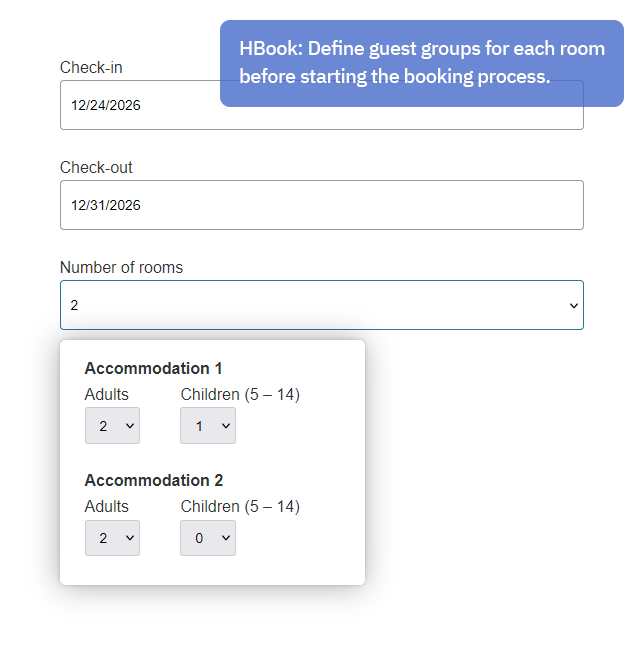
HBook follows a more traditional booking workflow. Guests first select their dates and define how many rooms they need, along with the number of adults and children assigned to each accommodation group.
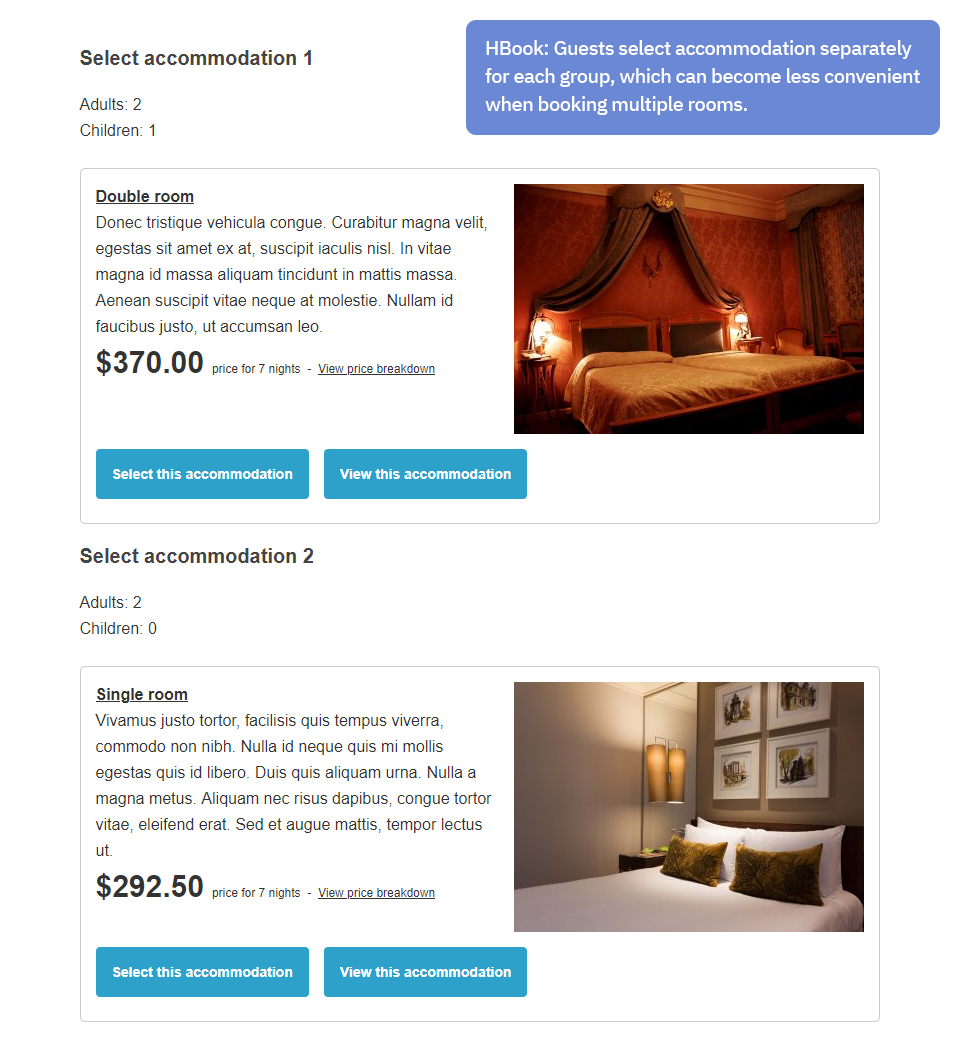
During the next step, guests choose accommodation types for each group separately. While this approach is functional, it can become less intuitive when multiple rooms and guest combinations are involved.
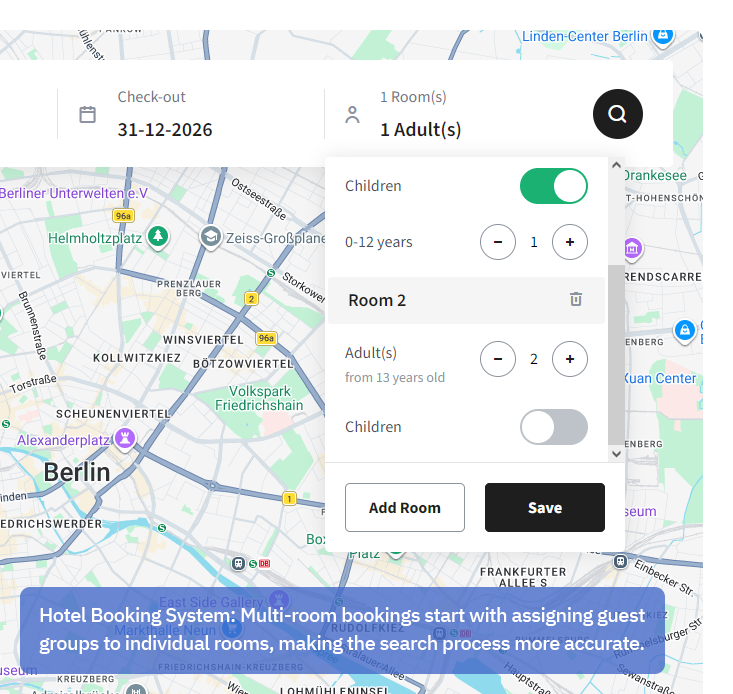
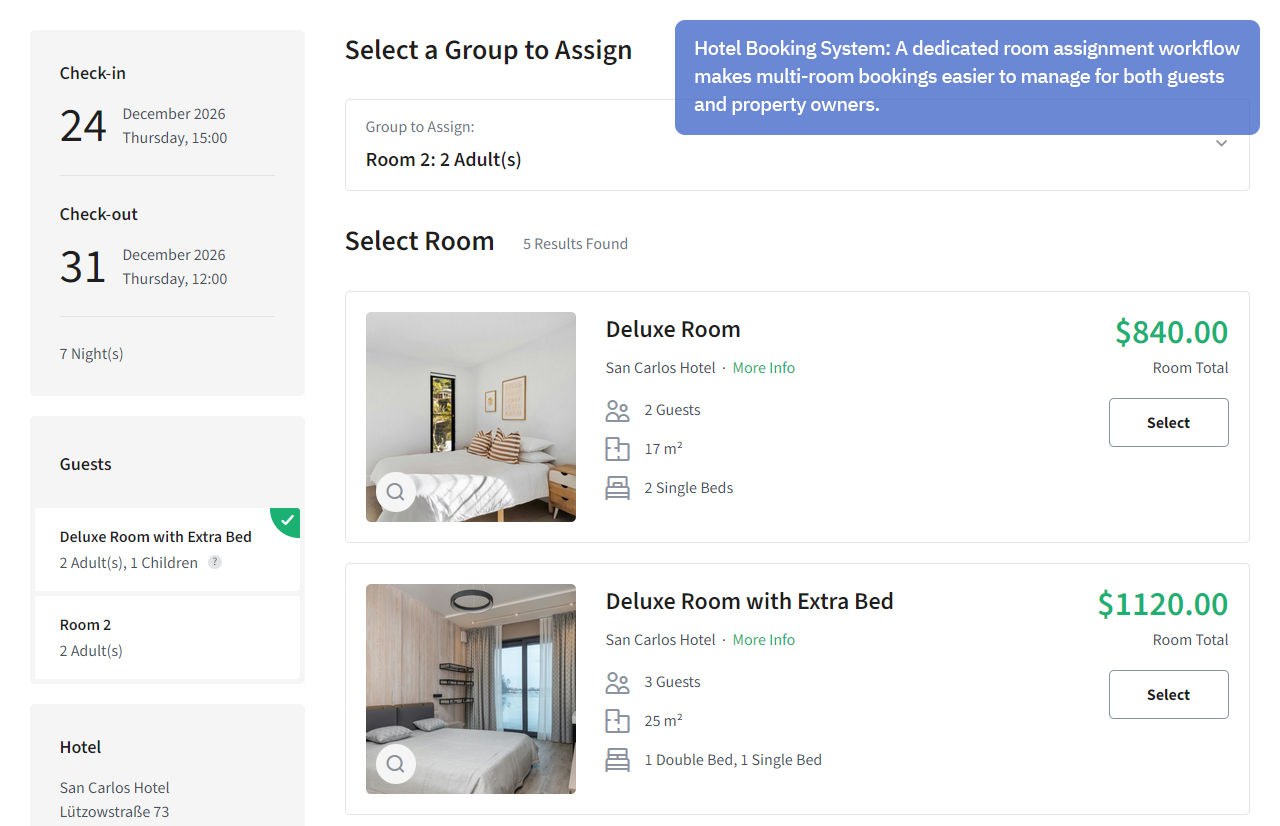
Hotel Booking System uses a modern step-by-step workflow focused on room selection and guest assignment. Guests can browse rooms with images, amenities, room details, and pricing before making a selection.
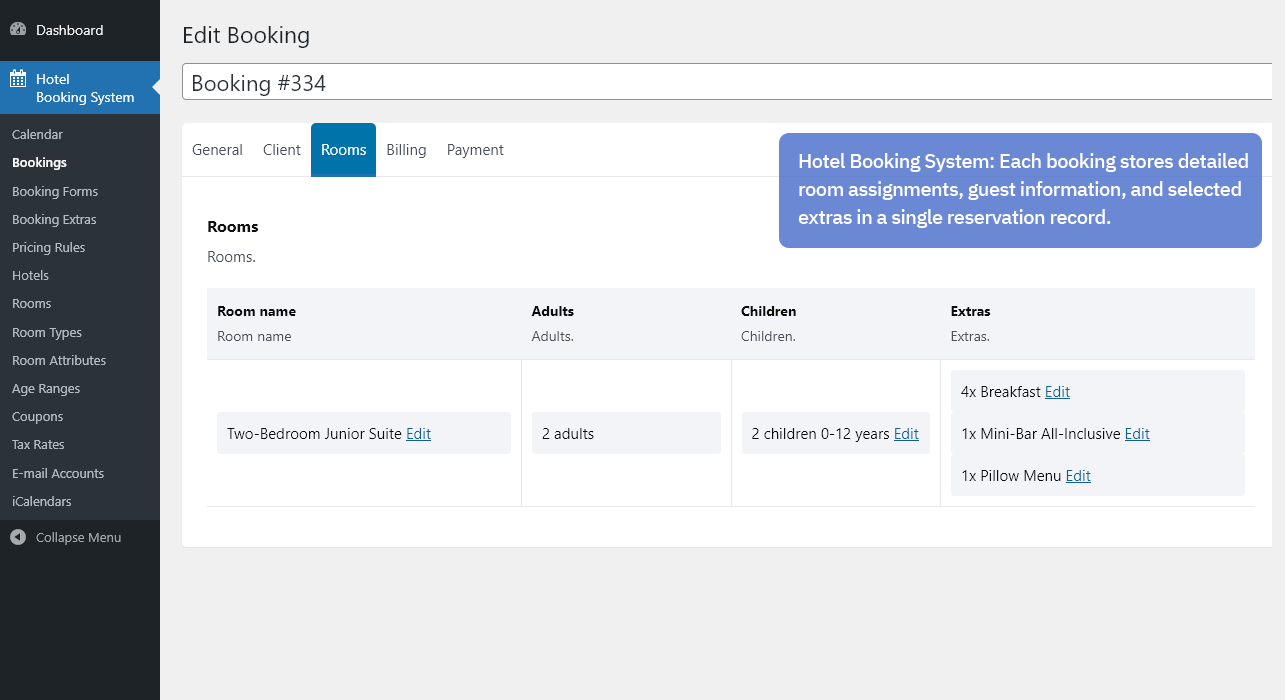
When booking multiple rooms, guests can assign specific guest groups to each room individually, making the booking process easier to understand for families and larger groups.
The booking form also includes an interactive sidebar summary that remains visible throughout the reservation process, helping guests keep track of rooms, extras, guest assignments, and pricing.
Managing rooms is a core feature of every hotel booking plugin, but the underlying structure can significantly affect flexibility as a business grows. While both plugins allow you to create rooms, define occupancy limits, add photos, and manage availability, their overall approach differs.
HBook is primarily organized around accommodation types and accommodation units. Administrators can define room types, create individual accommodations, manage rates, seasons, booking rules, and synchronize availability through iCal calendars. This structure works well for many hotels, guest houses, and vacation rentals where all accommodations belong to a single property.
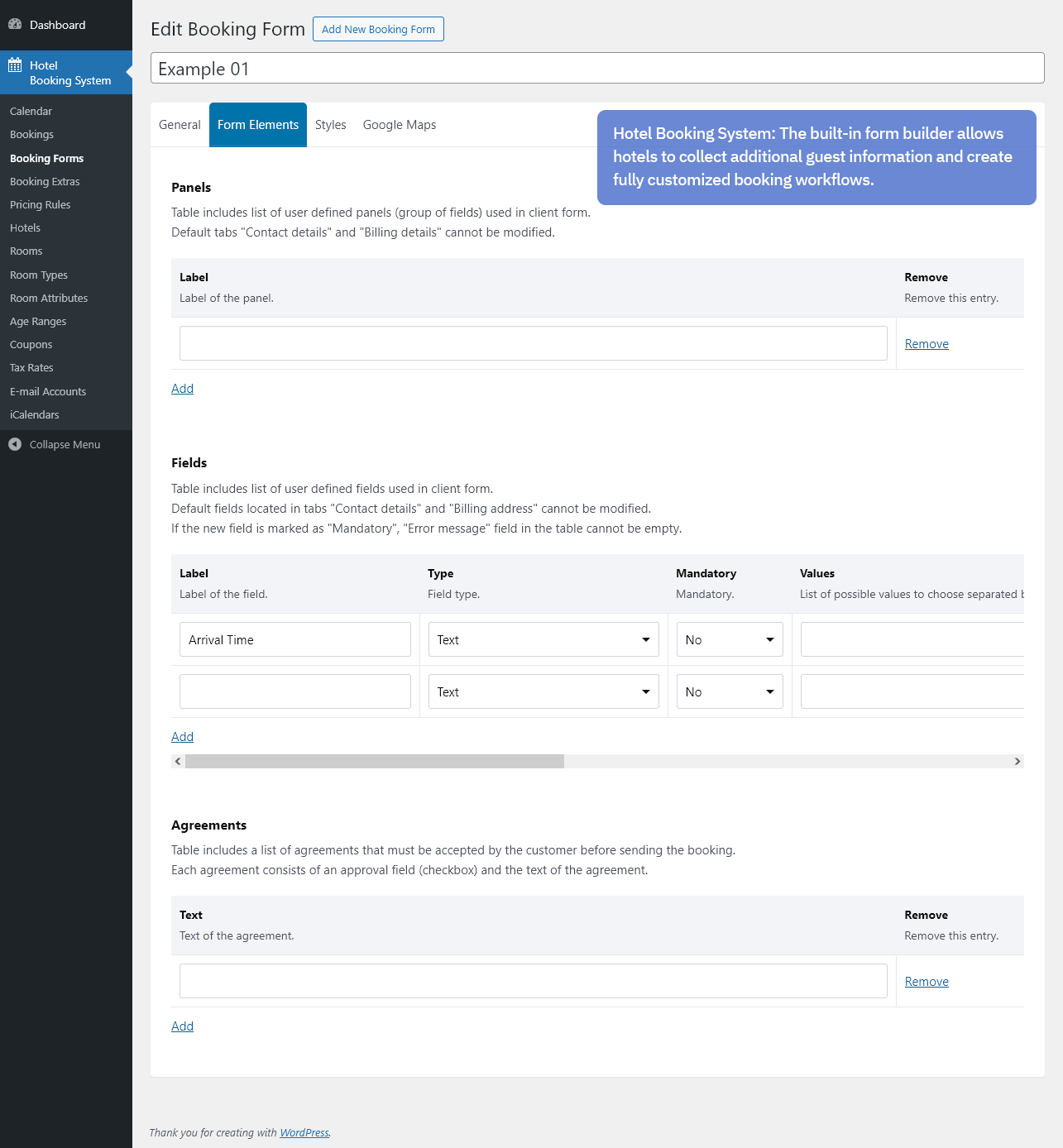
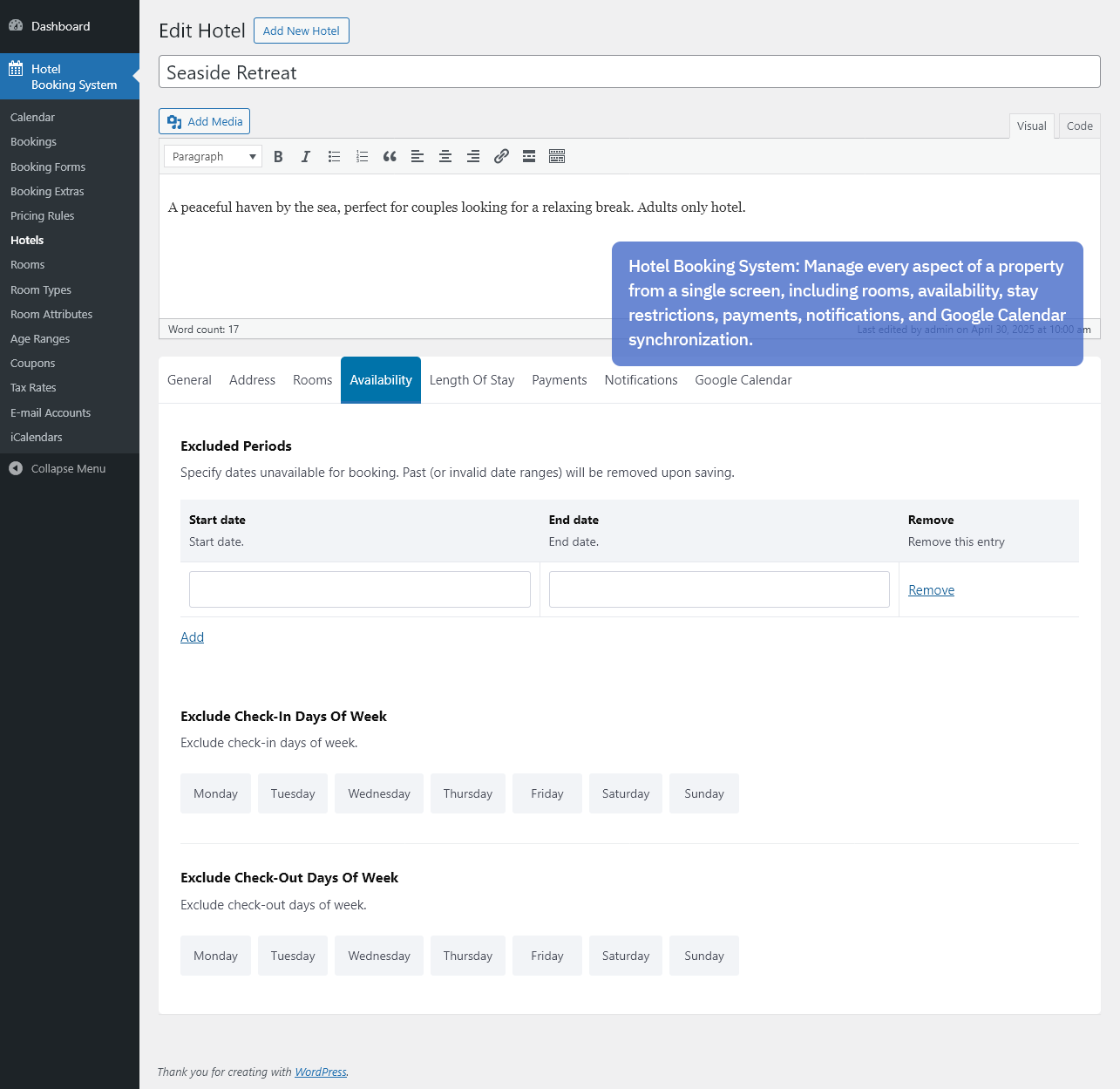
Hotel Booking System introduces a dedicated hotel-level structure. Instead of managing only rooms, administrators can create and manage multiple hotels or accommodation properties from a single WordPress installation. Each hotel can have its own rooms, availability settings, booking restrictions, payment methods, notifications, Google Calendar integration, booking periods, age groups, and location details.
This approach is particularly useful for businesses managing multiple properties, resorts, vacation rentals, or accommodation networks from a single website.
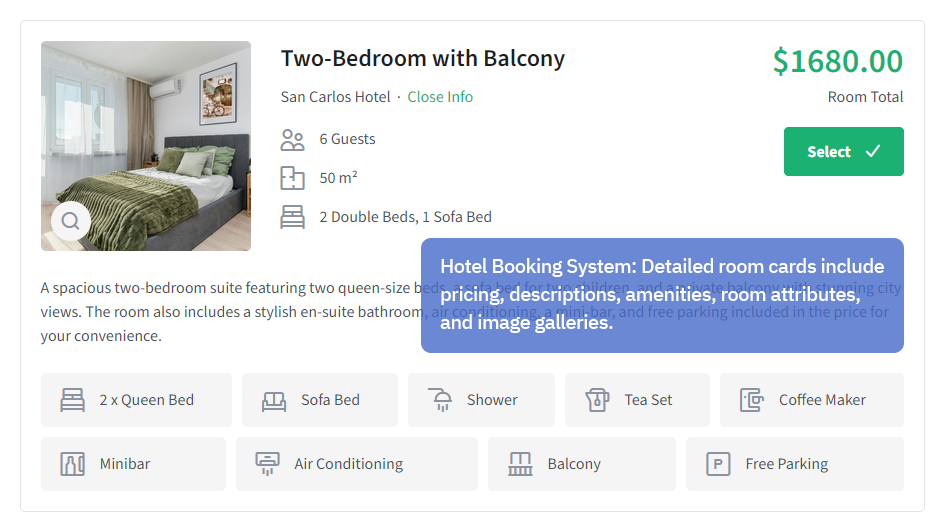
Both plugins support room images and descriptions, but Hotel Booking System places a stronger emphasis on room presentation during the booking process. Rooms can include image galleries, amenities, custom attributes, occupancy information, and detailed room descriptions. Guests can review room details before making a selection, creating an experience similar to major travel platforms.
The plugin also supports custom room attributes with icons, making it easier to visually communicate features such as balconies, parking, air conditioning, breakfast availability, private bathrooms, or other amenities.
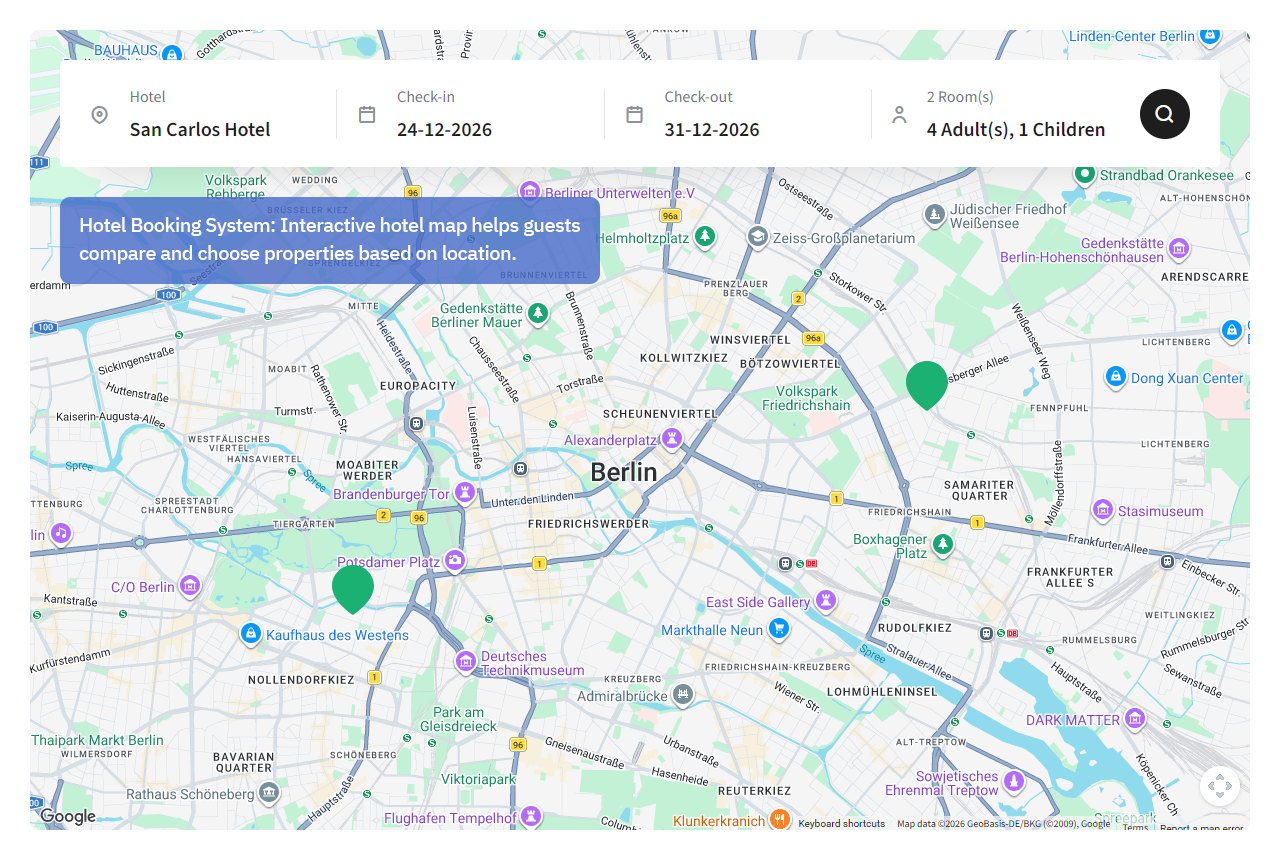
One feature not available in HBook is the interactive hotel location map. Hotel Booking System allows guests to browse available properties directly from a map interface with clickable hotel markers. This can be particularly useful for businesses operating multiple accommodation locations within a city, region, or tourist destination.
Pricing flexibility is one of the most important aspects of any hotel booking system. Accommodation businesses often need to adjust prices based on seasons, occupancy, stay duration, guest composition, or special offers. Both HBook and Hotel Booking System provide tools for managing pricing, discounts, deposits, and additional charges. However, the level of flexibility differs considerably.
HBook includes a solid pricing engine built around seasons, rates, booking rules, discounts, fees, coupons, and security bonds. Administrators can create seasonal pricing structures, define minimum or maximum stay requirements, apply discounts, and charge additional fees when certain conditions are met.
For many hotels, guest houses, and vacation rentals, these tools provide everything needed to manage standard accommodation pricing.
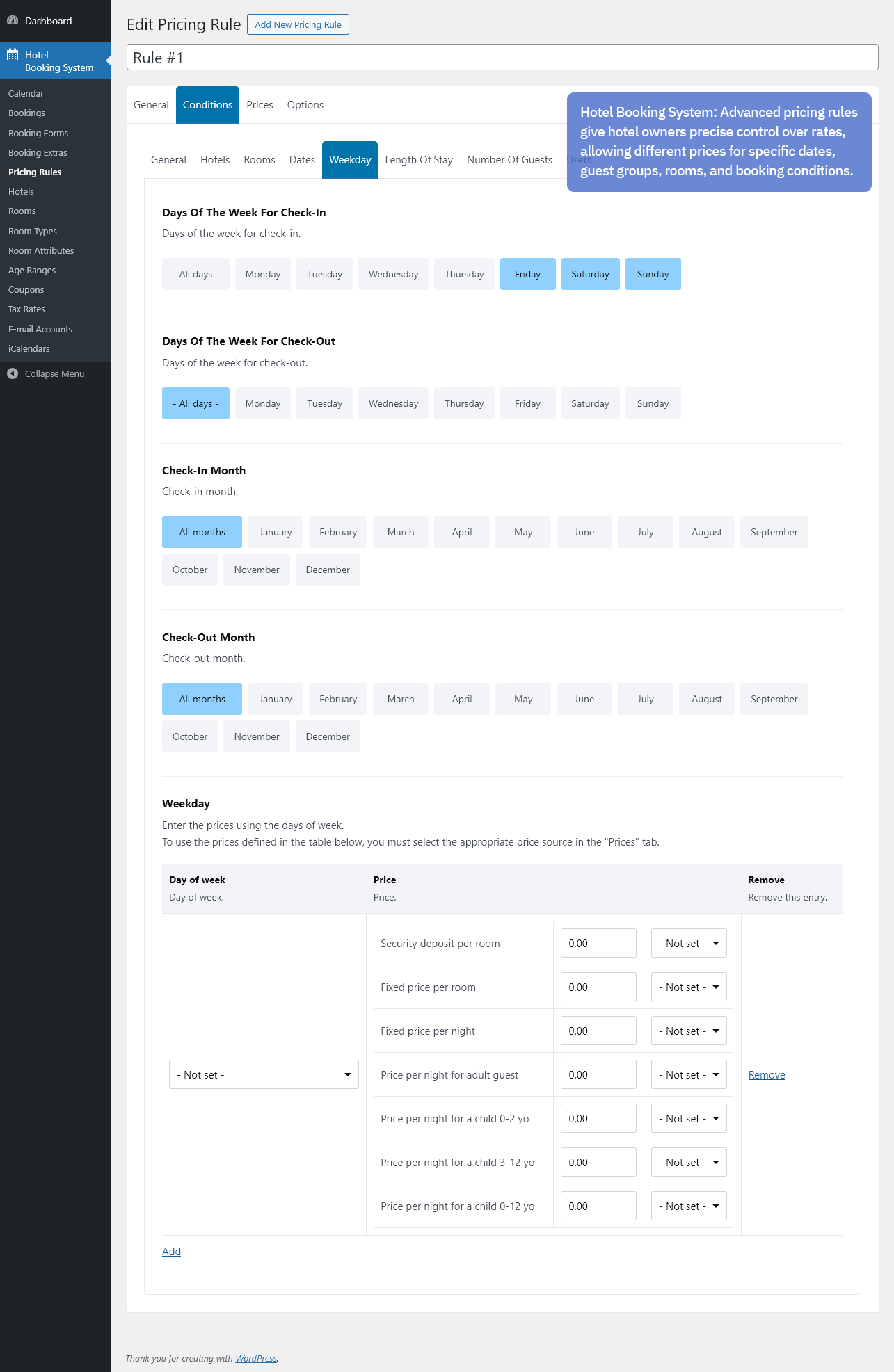
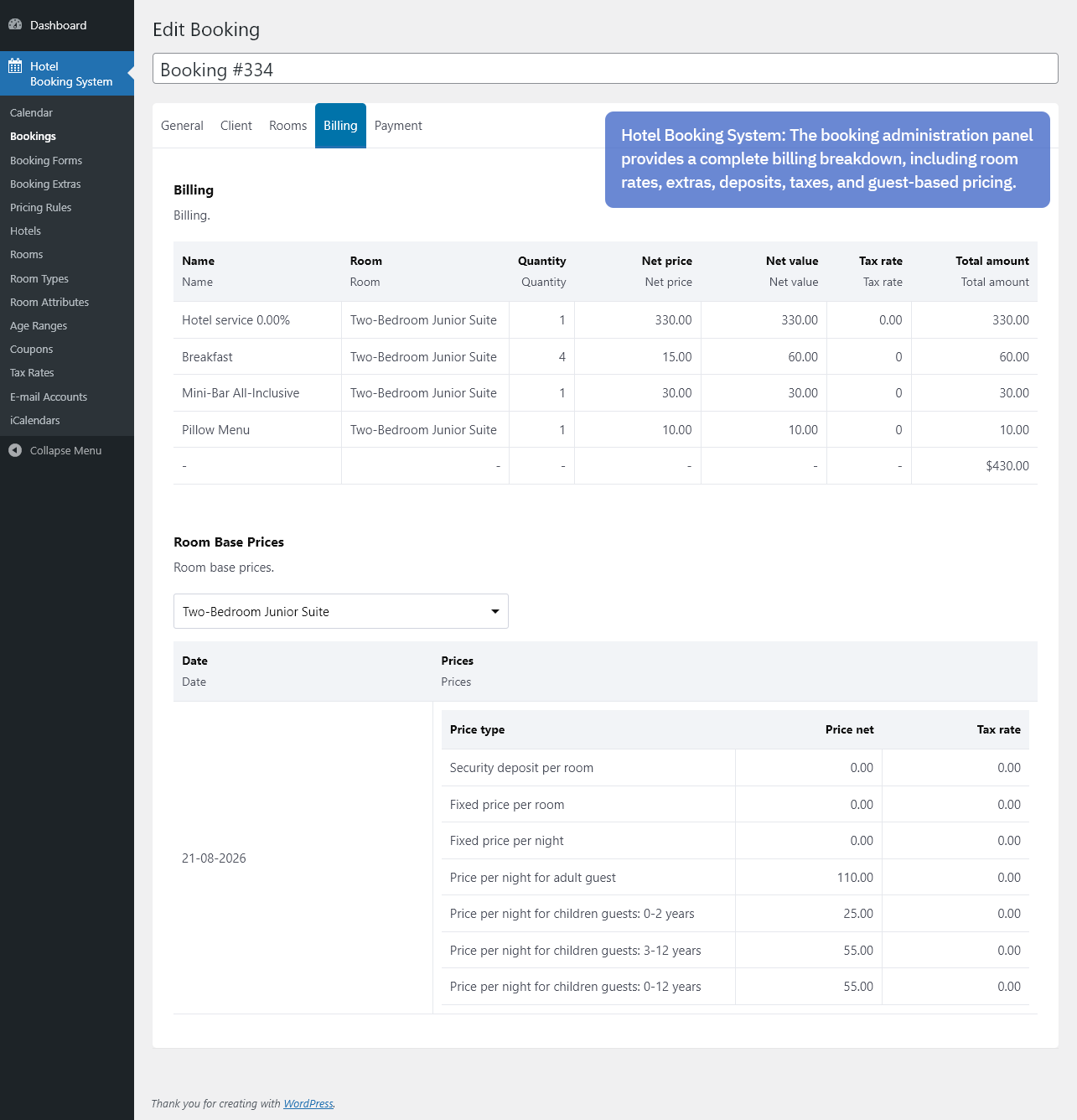
Hotel Booking System takes a more granular approach to pricing management by introducing a dedicated Pricing Rules module. Pricing rules can be applied based on booking forms, hotels, rooms, date ranges, weekdays, months, stay duration, guest counts, minimum booking values, and user-related conditions. Multiple rules can be combined to create custom pricing scenarios.
The system supports fixed room pricing, fixed nightly rates, security deposits, adult pricing, child pricing, and age-group-based pricing structures. This allows accommodation providers to build pricing models that closely match their business requirements.
One particularly flexible feature is the support for custom age groups. Instead of working only with generic adult and child categories, administrators can define their own guest age ranges and use them throughout the booking system. This can be useful for hotels that offer different pricing for infants, children, teenagers, adults, or senior guests.
Both plugins support discount coupons, deposits, and additional charges. HBook includes coupons, fees, discounts, and security bonds as part of its pricing system. Hotel Booking System provides coupon management with usage limits and validity periods, configurable security deposits, tax rates, and flexible pricing adjustments through its Pricing Rules engine.
One area where the two solutions differ significantly is currency management. HBook allows administrators to choose a base currency for bookings. Hotel Booking System supports multiple currencies within booking forms, making it possible to offer pricing in different currencies to international guests. Exchange rates can be managed manually or updated automatically using fixer.io integration. This can be particularly valuable for businesses serving guests from multiple countries.
Accepting payments online is a fundamental requirement for modern accommodation businesses. Both HBook and Hotel Booking System provide built-in payment options that allow guests to complete reservations directly through the booking form.
HBook includes support for Stripe, PayPal, cash payments, wire transfers, deposits, and security bonds. Administrators can decide whether guests should pay the full amount online, pay a deposit, or pay upon arrival.
This setup covers the needs of many hotels, guest houses, and vacation rental businesses without requiring additional plugins.
Hotel Booking System also supports Stripe, PayPal, cash payments, wire transfers, deposits, and security deposits. Payment methods can be configured independently for individual hotels, giving accommodation providers greater flexibility when managing multiple properties.
In addition, the plugin supports optional WooCommerce integration. This allows businesses to use WooCommerce payment gateways, including regional providers and payment methods not available through the plugin’s native integrations.
For businesses operating multiple hotels or accommodation locations, payment flexibility becomes increasingly important. Hotel Booking System allows administrators to configure payment settings at the hotel level, making it possible to tailor payment methods to the requirements of individual properties. This approach can be particularly useful when different locations operate under different business rules.
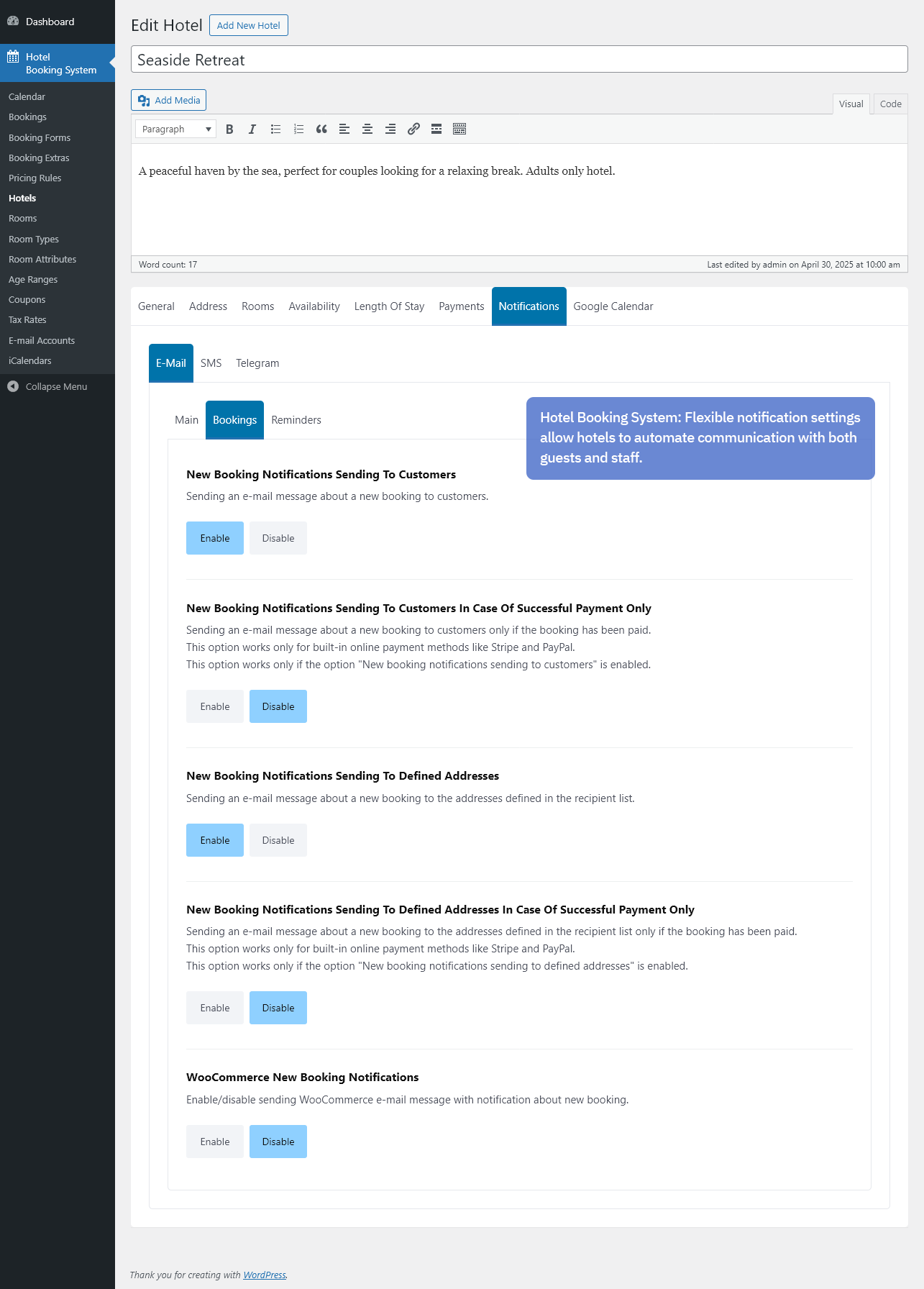
Guest communication plays a major role in the booking experience. Reservation confirmations, payment updates, arrival reminders, and follow-up messages help reduce no-shows, improve guest satisfaction, and minimize administrative work. Both HBook and Hotel Booking System provide automated communication tools, but they differ significantly in scope and flexibility.
HBook includes automatic email notifications for guests and administrators. Emails can be sent when a reservation is created, confirmed, updated, or canceled. For many accommodation businesses, email notifications provide a straightforward way to keep guests informed throughout the reservation process.
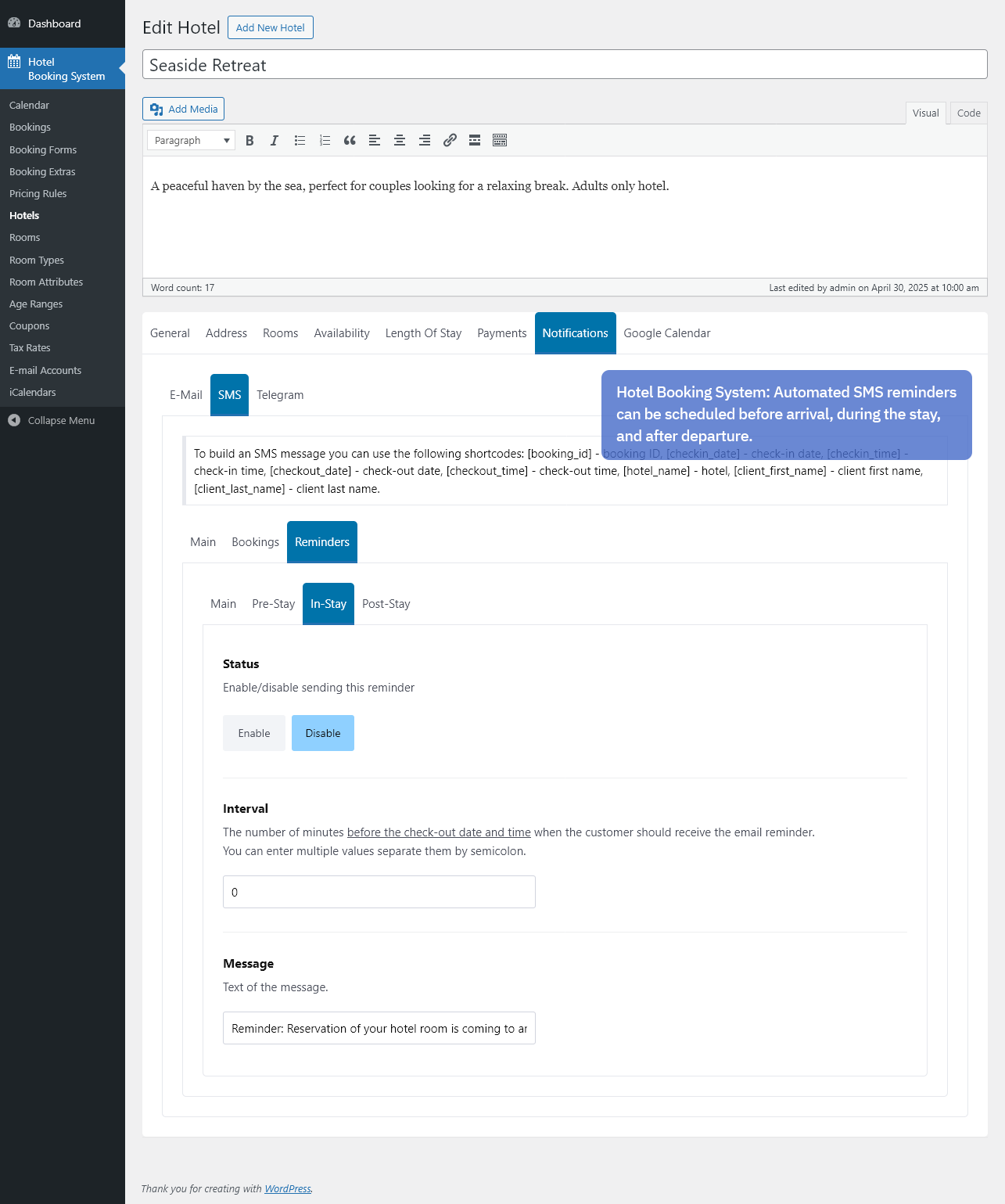
Hotel Booking System extends guest communication beyond email by supporting multiple notification channels, including email, SMS, and Telegram. The system integrates with popular SMS providers and helps automate communication throughout the guest journey.
One of the most notable differences is the ability to create automated reminders based on the guest’s stay timeline.
Hotel Booking System supports:
These automated messages can be used to provide check-in instructions, share useful information during the stay, or encourage guests to leave reviews after departure.
For businesses managing multiple hotels or accommodation locations, communication requirements can vary between properties. Hotel Booking System allows notification settings to be configured at the hotel level, making it possible to customize guest communication independently for each property. This flexibility can be particularly useful for accommodation businesses operating different brands, locations, or service standards within a single WordPress installation.
Modern accommodation businesses rarely operate through a single channel. Reservations often come from multiple sources, including direct website bookings, online travel agencies, and external calendar platforms. As a result, synchronization and integration capabilities are essential for preventing double bookings and maintaining accurate availability.
Both HBook and Hotel Booking System include calendar synchronization features, but they differ in the range of integrations and the overall flexibility of their ecosystems.
HBook supports iCal synchronization, allowing accommodation providers to import and export booking data from platforms such as Airbnb, Booking.com, VRBO, HomeAway, and other services that support the iCalendar standard. The plugin also includes Google Calendar synchronization and provides a practical solution for keeping availability aligned across multiple booking channels.
Hotel Booking System includes both iCal synchronization and Google Calendar integration, allowing accommodation providers to exchange booking information with external platforms and calendars. Calendar synchronization can be configured manually or automated with scheduled cron jobs. The system also maintains synchronization logs, making it easier to monitor imports, exports, and synchronization events.
One of the major differences between the two solutions is the availability of WooCommerce integration. While HBook operates as a self-contained booking platform, Hotel Booking System can optionally integrate with WooCommerce. This allows businesses to leverage WooCommerce features such as customer accounts, order management, checkout customization, and access to hundreds of additional payment gateways.
For businesses operating in regions where specific local payment providers are required, WooCommerce integration can significantly expand available payment options.
Both plugins provide flexible ways to place booking functionality throughout a website. HBook offers shortcodes and blocks for booking forms, availability calendars, accommodation lists, and pricing tables. Hotel Booking System includes dedicated booking widgets available in both horizontal and vertical layouts. These widgets can be embedded on landing pages, hotel pages, sidebars, or sliders, helping visitors start the booking process from virtually anywhere on the website.
Both HBook and Hotel Booking System are capable WordPress hotel booking solutions, but they are designed with slightly different priorities in mind.
HBook remains a strong choice for many accommodation providers and has earned its reputation through years of development. Hotel Booking System, on the other hand, focuses on multi-property management, advanced automation, flexible pricing, and a modern booking experience.
For accommodation providers looking for a modern booking experience, flexible pricing management, multi-property support, and advanced communication tools, Hotel Booking System (QuanticaLabs) represents a compelling alternative worth considering.
Explore Hotel Booking System for WordPress and see how it can support your accommodation business.
If you’re looking for a modern, flexible, and scalable solution for WordPress, the Hotel Booking System by QuanticaLabs combines multi-room and multi-property support, advanced pricing rules, seamless integrations, and a polished guest experience designed for today’s accommodation businesses.

We create WordPress plugins and themes used by businesses around the world. With more than 15 years of experience and over 125,000 products sold, we focus on building reliable tools that simplify bookings, rentals, scheduling, and online services.


